

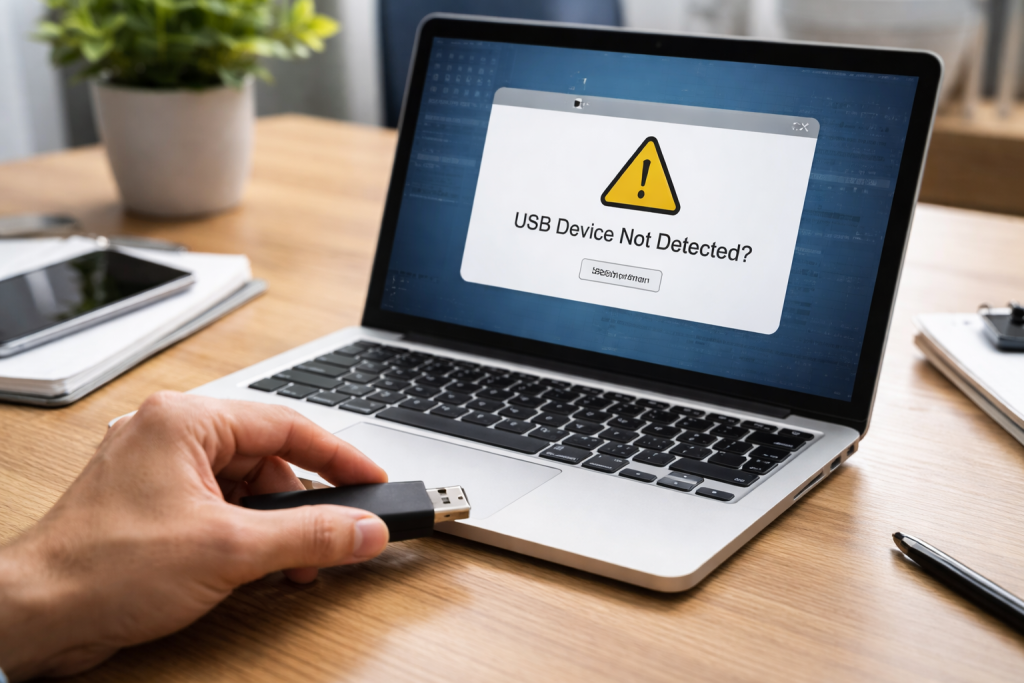
USB drives are a common tool for transferring data between computers. However, users sometimes encounter a problem where the USB drive does not appear in the file explorer. This article provides a structured approach to troubleshooting and resolving this issue.
Contents
- 1 Understanding Why Your USB Drive Might Be Invisible
- 2 Troubleshooting Steps for Recognition Issues
- 3 Addressing Hardware and Software Conflicts
- 4 Resolving Recognition Issues on Different Operating Systems
- 5 Recovering Data from an Unrecognized USB Drive
- 6 Advanced Solutions and Prevention
- 7 FAQs
- 7.1 1. What are the common causes of USB not showing up on a computer?
- 7.2 2. How can I troubleshoot USB connection issues on Windows?
- 7.3 3. What steps can I take to fix the “USB not recognized” error on a Mac?
- 7.4 4. How can I recover data from a USB drive that’s not showing up on my computer?
- 7.5 5. What are some other possible solutions for fixing USB not showing up issues?
Understanding Why Your USB Drive Might Be Invisible
A USB drive that fails to show up in your computer’s file system can be frustrating. Think of it like a key not fitting its lock; the connection is there, but the access isn’t granted. This invisibility can stem from a variety of sources, ranging from simple physical connections to deeper software conflicts. Identifying the root cause is the first step towards regaining access to your data.
The problem can manifest in several ways. Sometimes, the USB drive might appear in Device Manager but not in File Explorer. Other times, it might be completely absent from the system’s hardware detection. Understanding these distinctions can help narrow down the potential causes.
Physical Connection Issues
The most straightforward cause is often overlooked: a faulty physical connection. Like a loose wire on a lamp, a poor connection between the USB drive and the port can prevent it from being recognized.
Ensuring Proper Insertion
Sometimes, the USB drive might not be fully seated in the port. Gently but firmly push the drive into the port until you feel a solid connection. Avoid excessive force that could damage the port or the drive.
Trying Different USB Ports
Not all USB ports are created equal. Some may have more power available, or a particular port might be experiencing a temporary glitch. Trying a different USB port on your computer, including ports on the back of a desktop, which are often directly connected to the motherboard, can reveal if the issue lies with a specific port.
Testing with Another Device
To ascertain if the problem lies with the USB drive itself or your computer, connecting the drive to a different computer is a crucial diagnostic step. If it works on another machine, the issue is likely with your primary computer’s hardware or software. Conversely, if the drive remains unrecognized, the drive itself may be faulty.
Software-Related Problems
Beyond physical connections, software plays a significant role in how your computer interacts with external hardware. Bugs, outdated drivers, or conflicts can all contribute to a USB drive’s invisibility.
USB Controller Issues
The USB controller is a component on your motherboard that manages all USB devices. If this controller is malfunctioning or disabled, it can prevent any USB device from being recognized.
Power Management Settings
Modern operating systems have power-saving features that can sometimes disable USB ports to conserve energy. While usually beneficial, these settings can inadvertently cause recognition problems.
Troubleshooting Steps for Recognition Issues
When your USB drive goes missing, a systematic approach to troubleshooting can help you pinpoint and resolve the problem. Treating each step as a diagnostic clue can illuminate the path to recovery.
Checking Device Manager for Recognition
Device Manager is a Windows utility that lists all the hardware installed on your computer. It can reveal if the system sees the USB drive at a hardware level, even if it’s not appearing in File Explorer.
Locating the USB Device in Device Manager
To access Device Manager, right-click on the Start button and select “Device Manager.” Look for categories like “Universal Serial Bus controllers.” If your USB drive is detected but not functioning correctly, it might appear with a yellow exclamation mark, indicating a problem.
Understanding Error Codes
If a yellow exclamation mark is present, double-clicking on the device will often provide an error code and a description of the issue. These codes are like diagnostic messages from the hardware, guiding you towards the specific problem. For example, error code 10 might indicate that the device cannot start.
Verifying Disk Management Status
Disk Management is another vital Windows tool that shows all storage devices connected to your computer, including partitions and unallocated space. This tool can reveal if the USB drive is recognized by the system but lacks a drive letter or is not initialized.
Identifying Unallocated or Offline Drives
Open Disk Management by typing “Disk Management” in the Windows search bar. Look for your USB drive in the list. It might appear as “Disk X” with no drive letter assigned, or it could be shown as “Offline.”
Assigning or Changing Drive Letters
If the USB drive is recognized but lacks a drive letter, right-clicking on its partition and selecting “Change Drive Letter and Paths” allows you to assign one. This is often enough to make the drive appear in File Explorer.
Addressing Hardware and Software Conflicts
Sometimes, the problem isn’t with the USB drive itself, but with how your computer’s hardware and software are interacting. Like two programs fighting for resources, conflicts can disrupt normal operations.
Updating or Reinstalling USB Drivers
Device drivers are the software that allows your operating system to communicate with hardware. Outdated or corrupt drivers can lead to recognition problems.
Updating Drivers Through Device Manager
In Device Manager, right-click on the USB device (or the Universal Serial Bus controllers category) and select “Update driver.” Windows will attempt to find and install the latest driver.
Uninstalling and Reinstalling USB Controllers
If updating doesn’t work, you can try uninstalling the USB controllers. In Device Manager, under “Universal Serial Bus controllers,” right-click on each item and select “Uninstall device.” After uninstalling, restart your computer. Windows will automatically reinstall the necessary drivers upon startup, as if it were a fresh installation.
Restarting Your Computer
A simple reboot can resolve many temporary software glitches. When you restart your computer, all hardware is re-initialized, and temporary conflicts are often cleared.
The Power of a Fresh Start
Think of restarting your computer as giving it a clean slate. All running processes are stopped, and when the system boots up again, it starts with a clear memory, potentially resolving underlying issues that were preventing the USB drive from being recognized.
Resolving Recognition Issues on Different Operating Systems
| Operating System | Recognition Issues | Resolution |
|---|---|---|
| Windows | Driver conflicts | Update drivers or use compatibility mode |
| MacOS | Permission errors | Grant necessary permissions to the application |
| Linux | Library dependencies | Install required libraries or dependencies |
The steps to fix an unrecognized USB drive can vary slightly depending on the operating system you are using. Each system has its unique tools and methods for managing hardware.
Fixing USB Not Showing Up on Windows
Windows offers several built-in tools and procedures for addressing USB recognition problems. These methods aim to diagnose and rectify issues within the Windows environment.
Using the Hardware and Devices Troubleshooter
Windows has a troubleshooter specifically designed to identify and fix problems with hardware and devices. To access it, go to Settings > Update & Security > Troubleshoot > Additional troubleshooters and look for “Hardware and Devices.” Running this can often automatically resolve common USB issues.
Checking for Windows Updates
Ensure your Windows operating system is up-to-date. Microsoft frequently releases updates that include bug fixes and driver improvements, which can resolve compatibility issues with USB devices.
Fixing USB Not Recognized Error on Mac
macOS has its own set of tools for managing connected hardware. While the interface differs from Windows, the underlying diagnostic principles are often similar.
Using Disk Utility
Disk Utility is the macOS equivalent of Disk Management. Launch it from Applications > Utilities. It lists all connected storage devices. If your USB drive appears here, you can attempt to repair it using the “First Aid” function.
Checking System Information
System Information provides a detailed overview of your Mac’s hardware and software. Go to Apple menu > About This Mac > System Report. Under the “Hardware” section, select “USB,” and you should see a list of connected USB devices. If your drive is listed here, it indicates a hardware connection and detection, but it might not be mounting correctly.
Recovering Data from an Unrecognized USB Drive
If the USB drive is not showing up, it doesn’t necessarily mean your data is lost forever. Specialized software can often access and recover files from drives that the operating system can no longer properly recognize.
Using Data Recovery Software
Third-party data recovery tools are designed to scan storage devices at a low level, bypassing the operating system’s standard file system recognition.
Scanning for Lost Partitions and Files
These programs can often detect hidden or corrupted partitions, and scan for deleted or inaccessible files. You provide the software with the drive to scan, and it attempts to reconstruct the file system or recover individual files directly from the raw data.
Considerations for Data Recovery
It’s important to act quickly if your data is critical. Continued use of a faulty drive can potentially overwrite recoverable data. Also, selecting reputable data recovery software reduces the risk of causing further damage.
Advanced Solutions and Prevention
When basic troubleshooting doesn’t yield results, more advanced steps might be necessary. Proactive measures can also prevent future USB drive problems.
Formatting the USB Drive (Last Resort)
Formatting a USB drive erases all data on it and creates a new file system, essentially giving it a fresh start. This is a drastic measure and should only be considered after all data recovery attempts have been made and failed, or if the data on the drive is not important.
Understanding the Impact of Formatting
Formatting resolves file system corruption and can fix other logical errors. However, it will permanently delete all existing data on the drive.
Checking for Physical Damage
While not always visible, physical damage to the USB drive or its connector can be the cause of the problem. Bent pins, cracks, or signs of corrosion are indicators of potential physical failure.
Professional Repair and Replacement
If physical damage is suspected, professional repair might be an option for certain types of damage, but for most consumer-grade USB drives, replacement is often the more practical solution.
Preventing Future USB Connection Problems
Maintaining healthy practices with your USB drives can significantly reduce the likelihood of encountering recognition issues.
Safely Ejecting USB Drives
Always use the “Safely Remove Hardware” or “Eject” option before physically unplugging a USB drive. This ensures that all data transfers are complete and the drive is properly unmounted from the operating system, preventing data corruption and potential hardware issues.
Keeping Drivers and Operating System Updated
Regularly updating your operating system and device drivers ensures that your computer has the latest software to communicate effectively with all connected hardware.
Handling USB Drives with Care
Treat USB drives like any other sensitive electronic device. Avoid exposing them to extreme temperatures, moisture, or physical stress. Proper handling safeguards their internal components and extends their lifespan.
FAQs
1. What are the common causes of USB not showing up on a computer?
Some common causes of USB not showing up on a computer include faulty hardware connections, outdated device drivers, software conflicts, and corrupted file systems on the USB drive.
2. How can I troubleshoot USB connection issues on Windows?
To troubleshoot USB connection issues on Windows, you can start by checking the physical connections, updating device drivers, running the Hardware and Devices troubleshooter, and using Disk Management to assign a drive letter to the USB drive.
3. What steps can I take to fix the “USB not recognized” error on a Mac?
To fix the “USB not recognized” error on a Mac, you can try resetting the SMC and NVRAM, checking for software updates, using a different USB port, and testing the USB drive on another Mac or PC.
4. How can I recover data from a USB drive that’s not showing up on my computer?
You can recover data from a USB drive that’s not showing up by using data recovery software, trying the USB drive on another computer, and seeking professional data recovery services if necessary.
5. What are some other possible solutions for fixing USB not showing up issues?
Other possible solutions for fixing USB not showing up issues include disabling USB selective suspend settings, checking for system updates, using a different USB cable, and trying the USB drive on a different operating system.

Hamza Khan is the author and founder of TechFixLogic.info, a platform dedicated to providing practical software guides, tech solutions, and cybersecurity awareness. With a strong interest in technology and digital security, Hamza focuses on creating easy-to-understand tutorials that help users fix software issues, improve their digital skills, and stay safe online.
Through TechFixLogic.info, he shares step-by-step guides, troubleshooting tips, and cybersecurity insights designed for beginners as well as regular computer users. His goal is to simplify technology and make reliable tech knowledge accessible to everyone.


