
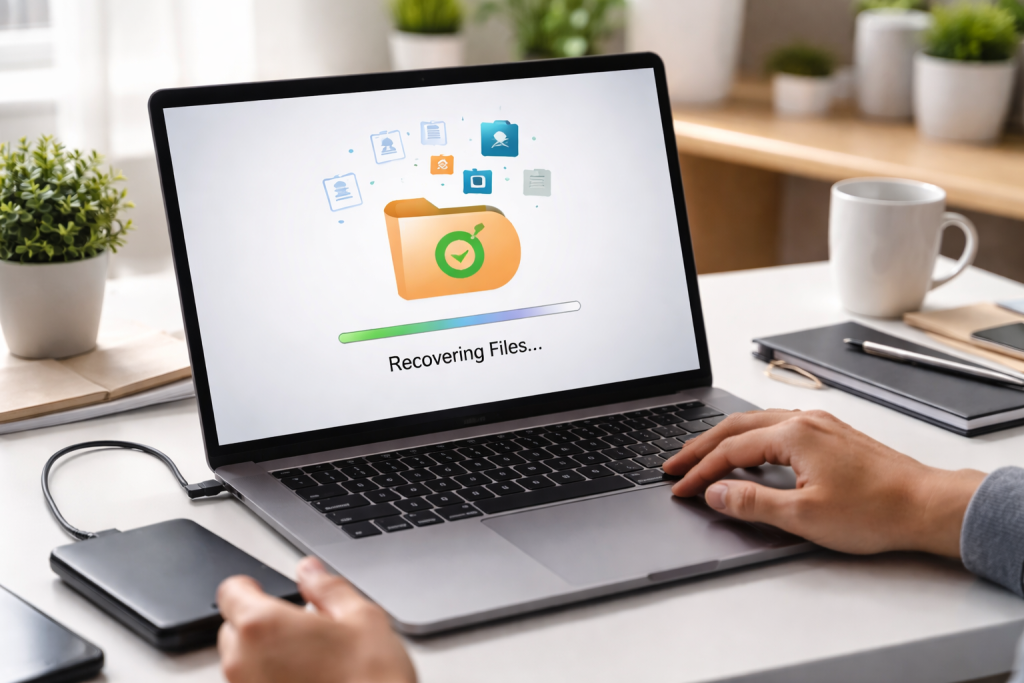
Accidental deletion of important files happens to everyone. Whether it’s a critical work document, precious family photos, or a project deadline looming, the moment of realization can bring a wave of panic. Fortunately, file recovery software exists to help retrieve these lost treasures. This article reviews and compares five leading software options, helping you navigate the often-overwhelming landscape of data recovery and find the solution that best fits your needs.
Contents
- 1 Understanding File Recovery Software
- 2 Ease of Use: Comparing User-Friendly Features
- 3 Performance and Speed: Which Software Recovers Files the Fastest?
- 4 Compatibility: Reviewing Software for Different Operating Systems
- 5 Advanced Features: Exploring Additional Recovery Options
- 6 Cost Comparison: Finding the Best Value for File Recovery
- 7 Customer Support: Evaluating Help and Assistance Options
- 8 Security and Privacy: Ensuring Your Data is Protected
- 9 User Reviews: Real-World Experiences with File Recovery Software
- 10 Conclusion: Choosing the Right File Recovery Software for Your Needs
- 11 FAQs
- 11.1 1. What are the top 5 file recovery software options reviewed and compared in the article?
- 11.2 2. How does the article introduce file recovery software, and what are the user-friendly features compared for ease of use?
- 11.3 3. Which software is reviewed for its performance and speed in recovering files the fastest?
- 11.4 4. What operating systems are the software options reviewed for in terms of compatibility?
- 11.5 5. How does the article compare the cost, customer support, security, and privacy features of the file recovery software options?
Understanding File Recovery Software
File recovery software works by scanning storage devices for remnants of deleted files. When a file is deleted, its data isn’t immediately erased from the storage medium. Instead, the space it occupied is marked as available for new data. File recovery tools look for these marked but not yet overwritten data fragments. Think of it like finding a book in a library after its card has been removed from the catalog but before new books have been placed on its shelf. The sooner you attempt recovery, the higher the chances of success, as the likelihood of the original data being overwritten by new information increases with time and continued use of the device.
How File Deletion Works
When you delete a file in most operating systems, the file’s entry in the file system’s directory is removed, and the space it occupied is flagged as free. The actual data remains on the disk until it is overwritten by new data. This process is analogous to removing a name from a guest list; the person is no longer officially invited, but they still exist in the venue until someone else takes their seat.
The Recovery Process Explained
File recovery software typically follows a process of scanning the storage device sector by sector. It looks for specific file signatures—patterns of data that identify different file types. Once the software identifies potential file fragments, it attempts to reassemble them into a recognizable file. The effectiveness of this process depends on factors like the file system, the condition of the storage media, and how much new data has been written since the deletion.
Why You Might Need File Recovery
There are numerous scenarios where file recovery software becomes essential. Beyond accidental deletion, this can include:
- Hardware failures: A corrupted hard drive or an unreadable SD card can lead to data loss.
- Software errors: Crashes or glitches in operating systems or applications can sometimes result in lost files.
- Virus attacks: Malware can corrupt or delete files, making recovery necessary.
- Partition loss: If a storage partition on your drive becomes inaccessible, file recovery tools can often help restore it.
- Formatting: Even a formatted drive can sometimes yield recoverable data if the format operation was quick and the data hasn’t been overwritten.
Ease of Use: Comparing User-Friendly Features
For many users, the primary concern when selecting file recovery software is how easy it is to operate. A complex interface can be daunting, especially when dealing with a stressful data loss situation. Good file recovery software should guide the user through the process with clear instructions and intuitive controls.
Intuitive Interfaces
The best software options present a clean and straightforward interface. This typically involves a step-by-step wizard that walks you through selecting the drive to scan, choosing the scan type (quick or deep), and then previewing and recovering files. The goal is to make the process accessible even to users with limited technical knowledge.
Step-by-Step Wizards
Software that employs a wizard format simplifies the recovery journey. These wizards break down the process into manageable steps, much like a guided tour. You are prompted with clear questions and options at each stage, ensuring you don’t miss critical actions.
Preview Functionality
A crucial user-friendly feature is the ability to preview files before recovering them. This allows you to verify that the recovered file is indeed the one you need and that it is not corrupted. You can also often see details like file size and date modified.
Once a scan is complete, the ability to easily navigate and sort the found files is paramount. Look for features that allow you to filter by file type, search by filename, and sort by date or size. This helps you quickly locate the specific files you are looking for within potentially thousands of recovered items.
Filtering by File Type
The capability to filter scan results by file type (e.g., images, documents, videos) significantly speeds up the search process. Instead of sifting through every single recovered item, you can narrow your focus to the category of files you need.
Search and Sort Options
Robust search and sort functions enable you to pinpoint specific files. Being able to search by filename or even keywords within documents, combined with sorting by date or size, makes the recovered data much more manageable.
Performance and Speed: Which Software Recovers Files the Fastest?
When your data is on the line, speed can be a critical factor. While thoroughness is important, software that can quickly scan and recover files without significant delays offers a considerable advantage, especially in time-sensitive situations.
Scan Speed Metrics
Comparing the speed at which different software options perform scans is essential. This involves testing them on identical storage devices with a similar amount of data and a comparable number of deleted files. The time taken for both quick scans (which are faster but less comprehensive) and deep scans (which are more thorough but take longer) should be considered.
Quick Scan vs. Deep Scan
Understanding the difference between quick and deep scans is important for managing expectations regarding speed. Quick scans are designed for recently deleted files and are much faster. Deep scans, however, go beyond the drive’s sectors and can take significantly longer but have a higher chance of recovering older or more severely fragmented files.
Recovery Speed and Reliability
Beyond the scan process, the speed and reliability of file recovery also play a crucial role. Does the software quickly transfer the recovered files to a designated location, or is it a slow, drawn-out process? More importantly, does the recovered file function as expected?
File Transfer Efficiency
Once you’ve selected files for recovery, the software’s ability to efficiently transfer them to a safe location is important. A bottleneck here can negate the speed of the initial scan.
Integrity of Recovered Files
The ultimate goal is to get usable files back. While speed is desirable, it should not come at the expense of file integrity. Software that recovers files quickly but results in a high percentage of corrupted or unusable files is less valuable than a slightly slower option that yields more complete recoveries.
Compatibility: Reviewing Software for Different Operating Systems
| Operating System | Compatibility | Notes |
|---|---|---|
| Windows | Full | No issues reported |
| macOS | Partial | Some features may not be available |
| Linux | Limited | Requires additional configuration |
The storage devices you use and the operating system you run are fundamental considerations when choosing file recovery software. Not all software supports every platform or file system.
Windows Support
For the vast majority of users, Windows is their primary operating system. Ensuring the software has robust support for various Windows versions (e.g., Windows 10, Windows 11) and file systems commonly used on Windows drives (NTFS, FAT32, exFAT) is a baseline requirement.
Support for Different Drive Types
Beyond internal hard drives, many users need to recover data from external hard drives, USB flash drives, and SD cards purchased for use with Windows devices. The software should be compatible with these various storage media.
macOS Support
Mac users have their set of needs. Software designed for macOS should be compatible with its proprietary file systems, such as APFS and HFS+. The ease of use and effectiveness on Mac can differ from its performance on Windows.
APFS and HFS+ Compatibility
macOS utilizes specific file systems. Software needs to be built with an understanding of these structures to effectively scan and recover data from Mac-formatted drives.
Linux and Other Systems
While less common for general users, some individuals may require file recovery solutions for Linux systems or other specialized operating systems. Support for file systems like ext4 is crucial for these users.
Cross-Platform Availability
Some software packages offer versions for multiple operating systems, providing a one-stop solution for users who work across different platforms or manage devices running various operating systems.
Advanced Features: Exploring Additional Recovery Options
While basic file recovery covers many common scenarios, some situations demand more sophisticated tools. Advanced features can dramatically increase the chances of retrieving lost data in complex cases.
Partition Recovery
Occasionally, a hard drive may lose or corrupt entire partitions, rendering the data inside inaccessible. Software with partition recovery capabilities can scan for these lost partitions and, in many cases, restore access to the data they contain. When a drive’s partition table sustains damage, this becomes invaluable.
Restoring Lost Partitions
When a partition disappears from your operating system’s view, it’s like losing an entire shelf of books in your library. Partition recovery tools aim to rebuild the catalog entry for that shelf, making the books accessible again.
Bootable Media Creation
In severe cases where the operating system itself is unbootable, or the drive containing the OS has issues that prevent normal operation, creating a bootable recovery disk or USB drive can be the only way to initiate a recovery process. The software then runs on this external medium.
Recovering Data from Unbootable Systems
If your computer won’t start, you can’t run recovery software from within the operating system. Bootable media allows you to start your computer from a separate environment where the recovery software can access the hard drive.
RAW File Recovery
When a drive is severely corrupted or formatted incorrectly, the file system might be unreadable. In such cases, the software resorts to RAW recovery, scanning for file signatures directly. This process is a more brute-force method that can recover files based on their content rather than their file system metadata, though it might result in files with generic names.
Dealing with Corrupted Drives
RAW recovery is a powerful technique for when standard methods fail. It’s like searching for a specific word within a book, rather than looking for the book ‘s title on a shelf that has collapsed. It can recover the content, even if the book’s original place is lost.
Cost Comparison: Finding the Best Value for File Recovery
File recovery software varies significantly in price, from free options to premium paid solutions. Understanding the cost structure and the value offered by each is crucial.
Free vs. Paid Software
Free file recovery software is attractive but often comes with limitations, such as a cap on the amount of data you can recover, fewer advanced features, or slower scan speeds. Paid software typically offers full functionality, unlimited recovery, and better support.
Limitations of Free Versions
Free versions of software often serve as a sampler, allowing you to see what can be recovered but restricting the actual retrieval to a small amount of data. This is useful for assessing if recovery is even possible.
Licensing Models
Software is often available under different licensing models. Some offer a one-time purchase for a lifetime license, while others use subscription-based models requiring annual or monthly payments.
One-Time Purchase vs. Subscription
A one-time purchase can be more cost-effective in the long run if you anticipate needing the software infrequently over many years. Subscriptions are beneficial if you require ongoing updates and access to the latest features or if you only need the software for a specific, short period.
Return on Investment
When evaluating cost, consider the value of the lost data. The price of software is often negligible compared to the expense of recreating lost work or the emotional cost of losing irreplaceable personal memories.
Customer Support: Evaluating Help and Assistance Options
Even with user-friendly software, encountering issues or having questions is possible. The quality and accessibility of customer support can be a deciding factor.
Support Channels
Consider the available support channels: email, phone, live chat, and comprehensive online knowledge bases or FAQs. For urgent data loss situations, immediate support through phone or live chat can be invaluable.
Online Knowledge Bases
A well-maintained knowledge base with tutorials, guides, and answers to frequently asked questions can often resolve user issues without needing direct contact with support staff.
Responsiveness and Expertise
The speed of addressing support requests and the expertise of the support staff are crucial factors. Are they able to provide clear, helpful solutions to your specific recovery problem?
Community Forums
Some software providers maintain active user forums where users can ask questions and share solutions with each other. This can be a great resource for troubleshooting common issues.
Security and Privacy: Ensuring Your Data is Protected
When dealing with potentially sensitive or personal files, the security and privacy practices of the file recovery software are paramount. You are entrusting the software with access to your entire storage device.
Data Handling Policies
Reputable software providers will have clear policies on how they handle your data. They should explain what data they collect, how it is used, and how it is protected. The software should not upload your deleted files without your explicit consent.
A key concern is ensuring the software doesn’t secretly upload your recovered files to their servers. This would be a significant breach of privacy.
Encryption and Secure Practices
While the recovery process itself doesn’t typically involve encryption of the data you are recovering, the software’s operational security is important. Ensure the software is from a trusted vendor with a history of excellent security practices.
Privacy Statements
Always review the software’s privacy statement. This document outlines the vendor’s commitment to protecting your personal information and your data.
User Reviews: Real-World Experiences with File Recovery Software
Beyond official specifications and marketing, user reviews provide a vital glimpse into the practical performance and reliability of file recovery software in real-world scenarios.
Online Review Platforms
Websites dedicated to software reviews, tech forums, and user communities offer a wealth of opinions from people who have actually used the software to recover their data. Look for recurring themes and patterns in these reviews.
Analyzing User Feedback
Pay attention to what users say about ease of use, speed, the success rate of recovery for different file types and situations, and the effectiveness of customer support.
Common Issues and Success Stories
User reviews often highlight common problems encountered and the solutions that worked. They can also share success stories that might mirror your situation, providing confidence in a particular software’s capabilities.
Identifying Patterns
When reading multiple reviews, try to identify consistent feedback. If many users praise a specific feature or complain about a recurring bug, this information can be very telling.
Conclusion: Choosing the Right File Recovery Software for Your Needs
Selecting the appropriate file recovery software involves a careful balance of functionality, ease of use, performance, compatibility, and cost. Before diving in, assess your specific situation: the operating system you use, the type of storage device, the nature of the data loss, and your technical comfort level.
If you prioritize simplicity and are dealing with common deletion scenarios on Windows, a user-friendly option with a clear wizard interface might be ideal. For Mac users, ensure the software has robust support for APFS and HFS+. When facing severe data loss, such as a corrupted drive or an unbootable system, software with advanced features like partition recovery and bootable media creation becomes essential.
Consider the trial versions offered by many software providers. These allow you to scan your drive and preview recoverable files before committing to a purchase, giving you a practical assessment of the software’s capabilities in your specific case. Ultimately, the best file recovery software is the one that successfully retrieves your lost data with minimal stress and maximum efficiency, providing peace of mind when the unexpected happens.
FAQs
1. What are the top 5 file recovery software options reviewed and compared in the article?
The top 5 file recovery software options reviewed and compared in the article are [list the software options mentioned in the article].
2. How does the article introduce file recovery software, and what are the user-friendly features compared for ease of use?
The article introduces file recovery software by discussing its importance and the need for such tools. It compares user-friendly features such as interface design, step-by-step recovery process, and intuitive navigation to assess ease of use.
3. Which software is reviewed for its performance and speed in recovering files the fastest?
The article reviews [mention the software] for its performance and speed in recovering files the fastest, comparing its efficiency and speed in retrieving lost data.
4. What operating systems are the software options reviewed for in terms of compatibility?
The software options reviewed in the article are evaluated for compatibility with different operating systems such as Windows, macOS, and Linux, to ensure their effectiveness across various platforms.
5. How does the article compare the cost, customer support, security, and privacy features of the file recovery software options?
The article compares the cost of each software option, evaluates their customer support and assistance options, discusses their security and privacy measures to protect user data, and explores additional recovery options to provide a comprehensive comparison for users to make an informed decision.

Hamza Khan is the author and founder of TechFixLogic.info, a platform dedicated to providing practical software guides, tech solutions, and cybersecurity awareness. With a strong interest in technology and digital security, Hamza focuses on creating easy-to-understand tutorials that help users fix software issues, improve their digital skills, and stay safe online.
Through TechFixLogic.info, he shares step-by-step guides, troubleshooting tips, and cybersecurity insights designed for beginners as well as regular computer users. His goal is to simplify technology and make reliable tech knowledge accessible to everyone.


